Archive for October 2009

Somdev guides India to the World Group after 11 years
India’s brilliant young Davis cup team reached the World group after 11 years where they will play Russia next year. It was a fantastic achievement considering India played with a young team this year that lacks experience playing in the Davis Cup. Somdev, Yuki and Rohan Bopanna are youngsters who haven’t played too much for India.
Leander and Mahesh have carried India’s hopes for so long and it’s heartening to see these youngsters coming through. Somdev reaching the second round of the US Open was a brilliant achievement and Yuki winning the Australian open juniors was special too. Rohan Bopanna has been playing pretty decent tennis too over the past year. This augurs well for India for the years to come. Somdev, Bopanna and Yuki helped India to a convincing 4-1 victory over South Africa away from home which is always special.
Playing for your country is special and these youngsters have done us proud. Yuki is just 17 years old and is number 1 junior player in the world. I hope that he matures into a very good player for India in the future. Given a chance to debut in the final dead rubber of the Davis cup tie against the SA he managed to beat Izak Van Der Merve to make the score line 4-1 in India’s favor. But the toast of the tournament for India was Somdev, who won both his singles tie to hand victory to India.
After his brilliant run in the Chennai open last year Somdev has been a revelation and continues to move up the rankings. I hope that this starts a golden run for India in tennis and we see a top 10 player during our lifetime. I wish all success to the Indian Davis cup team and hope that we defeat Russia in the World Group tie next year.
Batting Power play – An enigma
Posted on: October 7, 2009
- In: Cricket | Cricket and Sports | General | ODI | Twenty20
- Leave a Comment
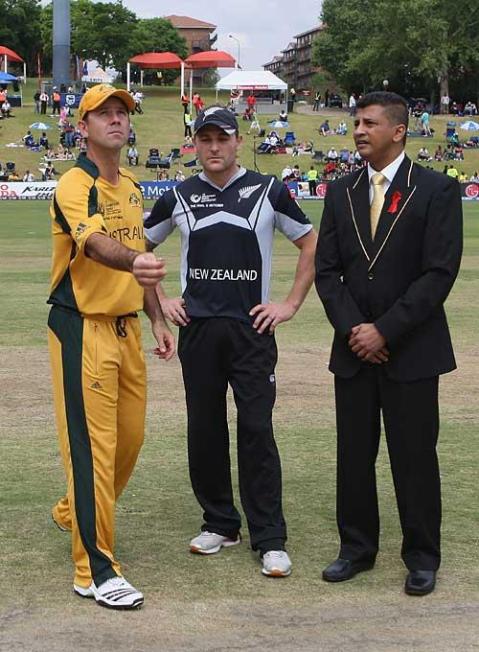
Captains should take Batting PP seriously to take advantage of the concept
Batting power play is the latest innovation by the ICC to spice up the 50 over format. Over the past year when this new concept has been in place it seems like the teams have found this hard to comprehend. It seem like the teams have found it hard to determine how to use this new concept to their advantage. Previously the ODI format had a 15 over field restriction rule when the batsmen can go berserk trying to muster as many runs as possible within that period. This gave birth to the pinch hitters and unconventional openers in the mid nineties.
The 15 over rule has been there for ages now and it seems like the teams are still stuck in that time in spite of the latest changes in the power play rule. The current power play (PP) has been extended to 20 overs with 15 bowling PP overs and 5 batting PP overs. The first 10 overs of PP are continuous but the bowling captain can choose when to take the rest of the 5 bowling PP overs. Then there are 5 PP overs which the batting team can take as and when they please within the 50 overs. If the batting team fails to take it by the end of the 45th over it is automatically applied or forced on the batting team.
Sounds simple enough but when you look at the ODI games in the recent times, it seems like the concept is more complicated for the captains then it actually looks. The bowling team takes the easy way out by taking the PP at a stretch for the first 15 overs keeping the older format in mind. So it works out simple for them, since the captain need not strategize and is happy to get the PP away. But the batting PP is the one which has got the teams napping. In the recent times most of the teams have been either forced to take it or have taken it one or two overs too late.
I guess the problem comes with the age old adage in ODI cricket that the slog overs start from the 40th over. The teams wait till the 40th over to decide whether they want to take the PP or not. Sometimes it works but most of the times the teams lose too many wickets which makes the PP almost useless. For example in the recent ODI between India and Pakistan, India was 190 odd for the loss of 5 wickets with two settled batsmen at the crease. The required RR was just over a run a ball and a perfect time to take PP. Suresh Raina was taking risks with the fielders on the boundary which made no sense as the PP was available for the Indians to take. India for some strange reason wait and Suresh Raina gets out and by the time India decides to take the PP they are 7 wickets down, virtually making the PP useless.
So what is the ideal time to take the batting PP? This is something the teams should discuss in their meetings prior to the games. They have to work out a strategy as to when they should take it and in what situation. The best situation as far as I am concerned is when two batsmen are going strong and are well set take the PP and score 40-45 runs which will put enormous pressure on the fielding team. The best example for timing was again a game involving India, when Sachin and Yuvraj where blasting the NZ bowlers earlier this year. They decided to take the PP as early as 22nd over and blasted 69 runs in those 5 overs. Brilliant decision whoever made the call to take the PP that early. India ended up with 392 on the board.
But these things are easier said than done. It’s very difficult to determine what goes through a cricketers mind when he is at the middle and yes there are team instructions to follow as well. We don’t even know if the players in the middle are actually allowed to take that call or not. Probably the coach sends out a message to take the PP. whatever may be the scenario if we take a sample of 50 odd games in the recent times, we will see that most teams have wasted the batting PP. If the ICC isn’t smart about it, this concept will also die down as the super sub did couple of years ago.
I guess the best way would be to put the pressure on the captains by saying that they have to take the PP themselves before the 46th over is bowled and will not be automatically applied if they don’t take it. It will be assumed that the team has given up the right to take the PP and it should work to the advantage of the bowling team. I guess if such a rule is put in place, it probably might receive more serious thinking by the teams during their discussions and probably will become part of their strategy. Unless something is done to make it more interesting, I guess the ODI game will still follow the same old adage of 15 overs of field restriction and last 10 overs of slog and the innovations will have no effect.
- In: Cricket | Cricket and Sports | General | IPL | ODI | Test match
- Leave a Comment
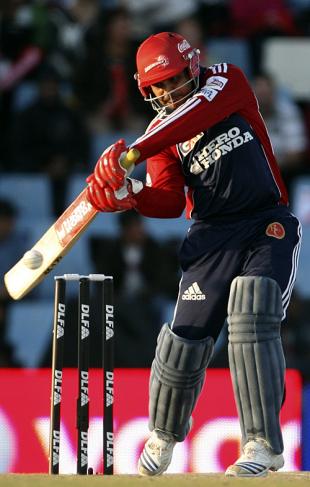
Sehwag will be playing for Delhi Daredevils in the upcoming CLT20 (Pic Courtesy Cricinfo)
The CLT20 starts in few days and no one is excited about the same. India’s early exit from the CT has barely evaporated our minds and we have this meaningless tournament from BCCI. CLT20 is money making venture from BCCI to cash in on the success of IPL. It has domestic teams from other countries too but I can care less as to whom they are. Deccan Chargers (IPL Champions), Delhi Daredevils and Bangalore Royal challengers will participate from the IPL in this event which is set to begin in few days time.
India’s exit from the CT and also the World T20 has left people questioning their rankings and I hope that the players take this time to work on their weakness. India is going to take on the Aussies at the end of this month and this extravagant circus cannot be an ideal preparation. I am happy that Ishant and Bajji aren’t a part of this. I would have been happy if the Indian players hit the nets and practice harder on developing their skills rather than participate in this meaningless tournament.
No matter what Amit Mishra says, the Indian bowling has been a disappointment over the past year and Dhoni was right to criticize the same. No matter how good your batting is, you cannot expect them to score 300 every time they walk out to bat. Ishant Sharma has lost his pace and seems pedestrian and so does RP Singh. It seemed as though the Indian bowlers are just going through the motions thinking that the batsmen would dig them out of the hole as they have done often in the past. When that does not happen, the Indian bowling gets shown pretty badly.
Bowlers have to be rotated especially in a busy season like this. We cannot keep going back to the same bowlers again and again. If RP was injured, he should have played domestic cricket to prove himself before making a comeback into the Indian team. He looked pretty listless in the CT. The selectors have to get Sreesanth back into the team and have to try out Sudeep Tyagi in the X1 against the Aussies. It seems like Munaf also looked good in the recently concluded Irani Cup game. If kick on the backside is something what the Indian bowlers are looking for then the selectors have to give it to them. It has been proven in the past that the Indian bowlers start well but within their first year lose their effectiveness.
Does money and adulation play a part? Yes it does. Ishant Sharma gets paid $950000 to play 40 days of cricket in the IPL, so why will he work on his fitness and improve? If getting bashed around for 40 days can earn you that much why work on your bowling and improve? It seems like only the players who want to make a comeback to the Indian team take even IPL seriously. India has a long season ahead of them and just a year and a half away from the WC. I hope that the selectors take the hint from the captain and blood some youngsters in the team.
Dhoni’s comment of IPL not being the gauge to pick players for the longer format is not far from the truth. Yusuf has proved the same over the past year. India needs to do something with their bowling otherwise they will be left behind in the race. I hope that India becomes the number 1 team in both the formats but for that to happen, we need a good bowling attack. Sudeep Tyagi, Sreesanth, Ishant, RP, Nehra, Munaf, Zaheer, Mishra, chawla and Bajji are the bowlers for India for coming few years and we have to identify the right combination by rotating them often.
 girisopinion
 My Thoughts